
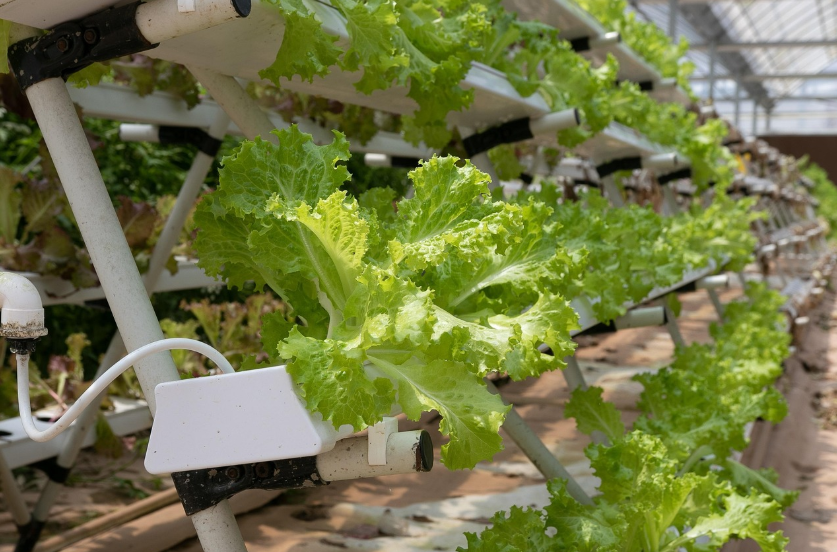
Root-zone health is the single biggest variable separating high-performing controlled environment agriculture (CEA) facilities from those that consistently battle yield inconsistency, disease pressure, and nutrient lockout.
Greenhouse sensors that continuously monitor electrical conductivity (EC), pH, and volumetric water content (VWC) give growers the feedback loops needed to keep substrate conditions within tight, crop-specific bands — and to deploy dryback strategies that build stronger, more resilient root systems over time.
What Greenhouse Sensors Actually Measure
EC sensors embedded in the substrate measure the combined conductivity of the solution surrounding root tissues, which directly reflects fertilizer salt concentration and available nutrient load.
When EC climbs above the target ceiling, salinity stress reduces water uptake by narrowing the osmotic gradient between roots and soil solution — effectively making plants work harder to absorb water even in a wet substrate.
Common EC targets vary widely by crop: tomatoes perform well between 2.0–4.0 mS/cm, cucumbers between 1.7–2.0 mS/cm, and lettuce between 1.2–1.8 mS/cm, while most cannabis cultivars sit comfortably in the 1.8–2.8 mS/cm range during vegetative growth and up to 3.5 mS/cm in late flowering.
pH governs which nutrients are chemically available at the root surface. Most CEA crops require a root-zone pH of 5.8–6.5; outside this band, elements like iron, manganese, and phosphorus become insoluble regardless of the EC level in the feed solution.
Substrate pH tends to drift upward during periods of strong vegetative growth as plants preferentially absorb negatively charged nitrate ions, releasing hydroxyl ions in exchange — a pattern that Grodan root-zone research identifies as one of the primary causes of mid-cycle pH spikes above 7.0. Inline pH dosing logic in systems like CCS Fertigation Manager™ can respond to these shifts automatically, adjusting acid injection to bring dripper pH back to target without manual intervention.
VWC sensors, typically using frequency domain reflectometry (FDR) technology, measure the dielectric permittivity of the substrate to express water content as a percentage of total pore volume. Placed at mid-slab or mid-container depth, they provide a continuous 24/7 read of root-zone saturation that growers use to set irrigation triggers, track daily moisture cycles, and confirm dryback targets have been reached before the next shot triggers.
The CCS Fertigation Manager™ supports up to 60 substrate sensors simultaneously across up to 20 zones, averaging readings across each zone and triggering irrigation cycles based on low VWC.
Sensor Feedback and Irrigation Dosing Precision
Real-time sensor feedback transforms irrigation scheduling from a reactive guessing game into a closed-loop control system. When VWC drops to a pre-set floor, the system fires an irrigation event to restore the substrate to saturation. Simultaneously, EC readings at the root zone and in drainage verify whether the feed concentration is accumulating or being depleted faster than planned.
Drainage EC monitoring is a practical guardrail against both leaching and salt accumulation. A widely applied rule of thumb holds that drainage EC should not exceed feed EC by more than roughly 0.5 mS/cm; if it does, insufficient irrigation volume or frequency is allowing salts to concentrate in the lower slab.
Leaching fraction — the ratio of drain volume to applied volume — should typically sit between 10–30% for most CEA crops, with tighter management near 10–15% in facilities targeting minimal fertilizer waste and reduced runoff.
Sensor-automated systems that adjust shot frequency based on actual VWC and EC readings keep leaching fraction within this window far more reliably than time-based programs.
Dryback Strategies for Root Development and Crop Steering
Dryback refers to the deliberate reduction in substrate VWC between irrigation events — a controlled period of partial drying that stimulates root exploration, improves root-zone oxygenation, and applies the mild hydraulic stress signals that steer plants between vegetative and generative growth phases.
At its most basic level, allowing VWC to drop partially between shots forces roots to extend outward and downward in search of moisture, producing a more expansive root architecture that supports larger canopies and greater nutrient uptake capacity. Overly wet substrates suppress this development by removing the hydraulic gradient that drives root elongation, and they create anaerobic pockets where pathogens like Pythium thrive.
The magnitude of the dryback determines the direction of plant steering:
- Vegetative steering: Shallow drybacks of 5–10% VWC from peak saturation keep plants in an active, shoot-dominant state by maintaining steady water and nutrient availability.
- Generative steering: Deeper drybacks of 15–30% introduce controlled hydraulic stress that promotes flowering, tighter internodal spacing, and — in cannabis — higher cannabinoid and terpene investment.
- Overnight dryback: During the dark period, no irrigation is applied, allowing a natural 5–25% VWC reduction depending on crop stage — a passive steering lever that shifts plant balance toward generative growth.
- Post-transplant dryback: After transplanting clones or seedlings, a moderate dryback encourages the young root system to colonize the slab or container quickly before irrigation frequency increases.
For coco coir substrates, peak VWC typically targets 65–75% at the top of the cycle, with generative drybacks targeting a floor near 50–55% before the next event fires. Substrate sensors make these targets enforceable rather than estimated, confirming exact moisture floors in real time.
Building a Sensor-Driven Root-Zone Program
Combining EC, pH, and VWC monitoring into a unified fertigation platform like the CCS Fertigation Manager™ creates an integrated root-zone management program rather than three separate data streams. EC and pH setpoints define the nutrient quality of each irrigation shot; VWC setpoints and dryback targets define the timing and volume.
Together they keep the root zone in the narrow physiological window where water availability, oxygen exchange, and nutrient solubility align — the conditions under which commercial crops consistently produce at their genetic potential. Have more questions? Contact CCS today.