
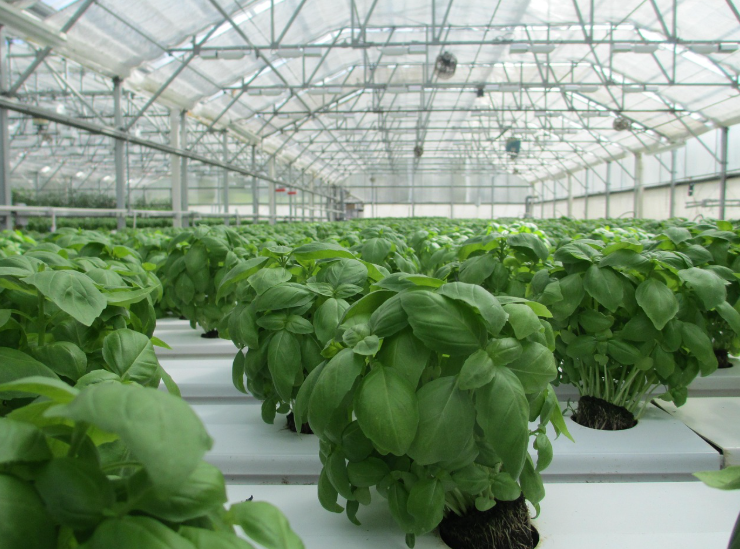
Commercial greenhouses that grow multiple crops or run multiple recipes to the same crop often face a balancing act. Each variety or cultivar demands its own nutrient mix, timing, and irrigation volume. Managing that complexity manually introduces errors and eats into labor hours.
With automated fertigation tools such as the Fertigation Manager™ from Climate Control Systems Inc., growers can centralize nutrient control on a single programmable platform.
Instead of mixing separate fertilizer batches for every crop, growers create software-based feed formulas customized by zone. This automation ensures that lettuces, tomatoes, herbs, ornamentals or special strains each receive nutrients suited to their specific growth stage—with no guesswork.
The result is steadier nutrition, greater efficiency, and consistent quality at a commercial scale.
Why Precision Fertigation Matters
Fertigation blends irrigation and nutrient delivery, moving dissolved fertilizer through existing lines directly to plant roots. The more precisely you can control timing, concentration, and volume, the more stable the root-zone environment becomes.
Automated fertigation standardizes those variables across multiple zones, reducing crop stress while improving uniformity and nutrient uptake.
The Fertigation Manager™ from Climate Control Systems Inc. integrates injectors, mixing tanks, sensors, and a central computer to monitor and adjust in real time.
Managers can build recipes for each growth phase, set target pH and electrical conductivity (EC) values, and automatically schedule feed events.
For operations growing multiple crops or strains at different stages of growth under one roof, this technology ensures that each section of the greenhouse or indoor facility receives exactly what it needs—no overfeeding, underfeeding, or time lost recalibrating lines.
Step 1: Map Crop Nutrient Needs by Zone
Start by documenting every crop’s nutrient requirements for each significant growth stage. Group plants with similar needs—such as leafy greens, fruiting vegetables, or flowering ornamentals—into shared irrigation zones. Or stager your set-up based on the stage of growth for the plants
Climate Control Systems Inc. uses this same zoning concept when designing custom fertigation layouts. Organized zones simplify programming because each circuit can follow a standard recipe within your Fertigation Manager™ software.
This step also helps you plan expansions and maintain consistent control settings for years to come.
Step 2: Build Baseline Recipes in the Fertigation Manager™
Once you’ve defined target nutrient levels, create base recipes in the digital control interface. Enter the desired N‑P‑K and micronutrient ratios and specify stock‑tank concentrations and injection intervals.
If your operation runs multiple crop cycles, establish separate programs for propagation, vegetative, and finishing stages. The Fertigation Manager™ can store and switch between these recipes without manual mixing, letting you change feed schedules instantly across zones.
Before full deployment, verify that the programmed EC and pH match your real-world output using calibrated meters. This fine‑tuning ensures accuracy for each batch delivered through the irrigation network.
Step 3: Schedule Feeding and Account for Seasonality
Use the scheduling tools to match nutrient delivery with crop uptake patterns and environmental factors. Smaller, more frequent applications help keep EC steady and prevent nutrient leaching.
As light intensity and temperature rise during warmer seasons, plants absorb nutrients faster.
Adjust timing or concentration accordingly. These processes are all documented in the control software, and that lets you repeat successful patterns year after year—creating your own in‑house growing database.
Step 4: Monitor, Log, and Refine
The Fertigation Manager™ automatically records in system logs, injection times, amounts fed, nutrient amounts delivered, EC & pH during these events and records alarm events. Reviewing this historical data alongside yield records provides managers with insight into which nutrient strategies deliver the best results.
Schedule periodic calibration of your inline pH or EC sensors to maintain accurate readings. Since automated fertigation depends on tight feedback control, sensor precision directly impacts crop uniformity and resource efficiency.
Growers using Climate Control Systems’ integrated setups often connect their Fertigation Manager™ to the Climate Manager™ or Ozone Pro Water Treatment™ system for complete environmental oversight—combining nutrient control, climate data, and clean irrigation water in one ecosystem.
Step 5: Train Staff and Standardize Procedures
Automation handles the physical work, but informed staff keep operations running smoothly.
- Train your team to load recipes, recognize alarms, and confirm proper operation from the control interface.
- Clear procedures for switching tank solutions or adjusting crop schedules prevent downtime and protect system integrity.
Climate Control Systems Inc. provides on‑site commissioning and digital training resources so teams can manage feeding programs confidently, even as personnel change.
Nutrient Precision as a Competitive Edge
When every part of your operation follows accurate, repeatable feed formulas, you achieve predictable growth and reduce costly waste. The Fertigation Manager™ transforms nutrient management from a hands‑on task into a data‑driven process—helping commercial growers deliver uniform quality across multiple crops and bays.
If your greenhouse is ready to upgrade to precise, software‑controlled nutrition, contact Climate Control Systems Inc. or call 519‑322‑2515 for a detailed walkthrough of how automated fertigation can reshape your production schedule.