
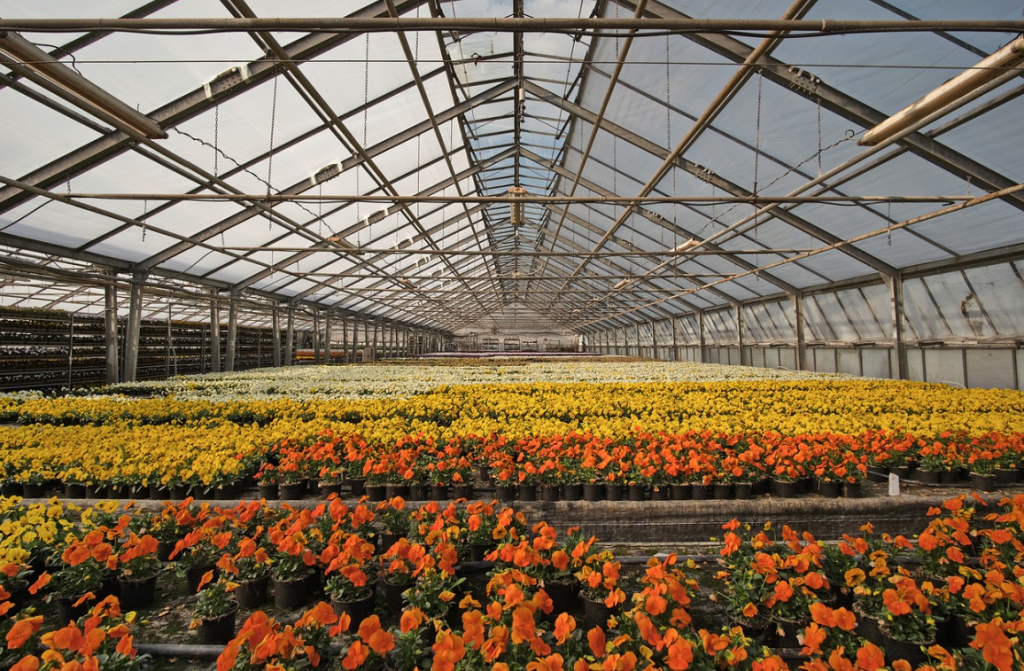
Ozone water treatment has become an important biosecurity tool for the commercial greenhouse and indoor facility, where every irrigation cycle can either suppress or spread disease. Climate Control Systems’ Ozone Pro greenhouse & CEA water treatment systems use nano bubbles of ozone injected into irrigation and drain water to sterilize, delivering clean, oxygen‑rich water back to crops without adding chemicals.
This approach targets fungi, bacteria, and viruses throughout the irrigation line, reducing disease pressure while supporting closed‑loop fertigation and water recycling.
Why Irrigation Water Matters in Commercial Greenhouses
In a commercial greenhouse, drip lines, ebb‑and‑flow systems recirculate large volumes of water through shared plumbing, benches, and emitters. Any contamination in that water such as Pythium, Phytophthora, Fusarium, or bacterial pathogens can spread rapidly from a localized problem to a house‑wide outbreak.
Traditional chlorine treatments can manage some of this risk, but they introduce by‑products and residuals that many growers prefer to avoid, especially for high‑value food crops and sensitive ornamentals.
Ozone addresses this challenge by acting as a powerful oxidizing disinfectant that is generated on‑site, injected into irrigation water, and then allowed to decompose back to oxygen. CCS describes ozone as capable of killing “all and any bacteria, viruses and pathogens” in irrigation water, with automated systems designed to sterilize both fresh supply and recycled drain water before it returns to feed tanks.
How Ozone Inactivates Fungi, Bacteria, and Viruses
When dissolved in water, ozone diffuses to the surface of microorganisms and initiates a cascade of oxidation reactions:
- For bacteria, ozone damages cell membranes, disrupts enzyme systems, and causes leakage of cellular contents, leading to rapid cell death.
- For fungi and fungal spores, ozone compromises the integrity of the cell wall and membrane, then disrupts internal organelles and cytoplasmic function, effectively inactivating spores in water.
- For viruses, ozone diffuses through the protein coat and oxidizes capsid proteins and nucleic acids, damaging RNA or DNA and preventing replication.
Ozone offers high kill rates on fungi, bacteria, and viruses in irrigation water. Relatively low concentrations and short contact times can inactivate bacteria, molds, yeasts, and viruses in water applications.
No Chemical Residues, Strong Fit for Commercial Greenhouse Standards
One of ozone’s main advantages in a commercial greenhouse and CEA facilities is that it does not leave chemical residues in irrigation water, on foliage, or in the substrate.
After reacting, ozone reverts rapidly to oxygen (O₂), which enhances dissolved oxygen levels in the root zone. This is why growers use ozone: it disinfects without forming chlorinated by‑products or leaving a lasting biocidal residual.
Integrating Ozone into Commercial Greenhouse Irrigation
In practice, ozone is generated on‑site with oxygen generators supplying pharmaceutical grade dry oxygen using an ozone generator, then dissolved into irrigation water via a nano-bubble pump. Climate Control Systems’ Ozone Pro systems inject ozone into greenhouse effluent and irrigation supply lines so that:
- Drain water is sterilized before it is blended back into feed tanks in closed‑loop fertigation systems, reducing both disease pressure and fertilizer waste.
- Main irrigation lines remain clean, with ozone reducing biofilms, algae, and microbial buildup that can harbor pathogens and clog emitters.
- Feed water meets high microbiological standards, supporting sensitive vegetable crops, ornamentals, and cannabis in commercial greenhouse settings.
Disease Management Benefits for the Commercial Greenhouse
For a commercial greenhouse or CEA facility operator, the payoff from ozone sterilization shows up as fewer disease incidents, more uniform crops, and greater confidence in reusing irrigation water.
Climate Control Systems positions its Ozone Pro Water Treatment as part of a broader automation ecosystem, where Fertigation, climate control, and water treatment all work together to safeguard the crop. Call us today!